
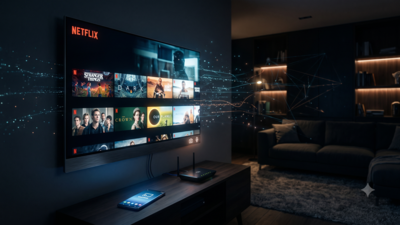
Turning a smart TV off doesn't always turn it off. That's the uncomfortable takeaway from a recent investigation into LG, which found microphones still picking up audio in standby mode, screen dark, nothing on it suggesting anything was happening at all. The company disputes the findings, but the bigger point holds regardless of how that dispute settles: every smart TV on the market runs some version of the same data-collecting machinery, and most of it is switchable, if you know where to look.
What your TV actually watches you do
Start with the feature every smart TV has, whatever the badge on the front says: Automatic Content Recognition, or ACR. It samples snippets of the audio and video passing through your screen, turns them into a digital fingerprint, and matches them against a library to figure out exactly what you're watching, on any input, from any source. It doesn't matter if it's a streaming app, a cable box, an antenna, or a Blu-ray player plugged into HDMI; ACR reads the screen, not the source.Voice control is the second layer. If your remote has a mic, the TV listens for a wake word to trigger it, and once triggered, that audio typically goes to a cloud server for processing, not just the TV itself.The third layer, network scanning, is a little less publicised. Smart TVs are always scanning for other devices on the same Wi-Fi network—phones, smart speakers, watches, and so on. This is supposedly to allow casting and file-sharing. In practice, that scan can produce a pretty complete inventory of everything connected in your home.These three layers can be condensed into a few select categories. This includes your viewing history and content preferences. It can also collect hardware identifiers, IP addresses and Wi-Fi information. An advertising ID may also track you across devices. Depending on the device, it may collect voice recordings and voice queries.It can also estimate your general location through the…